
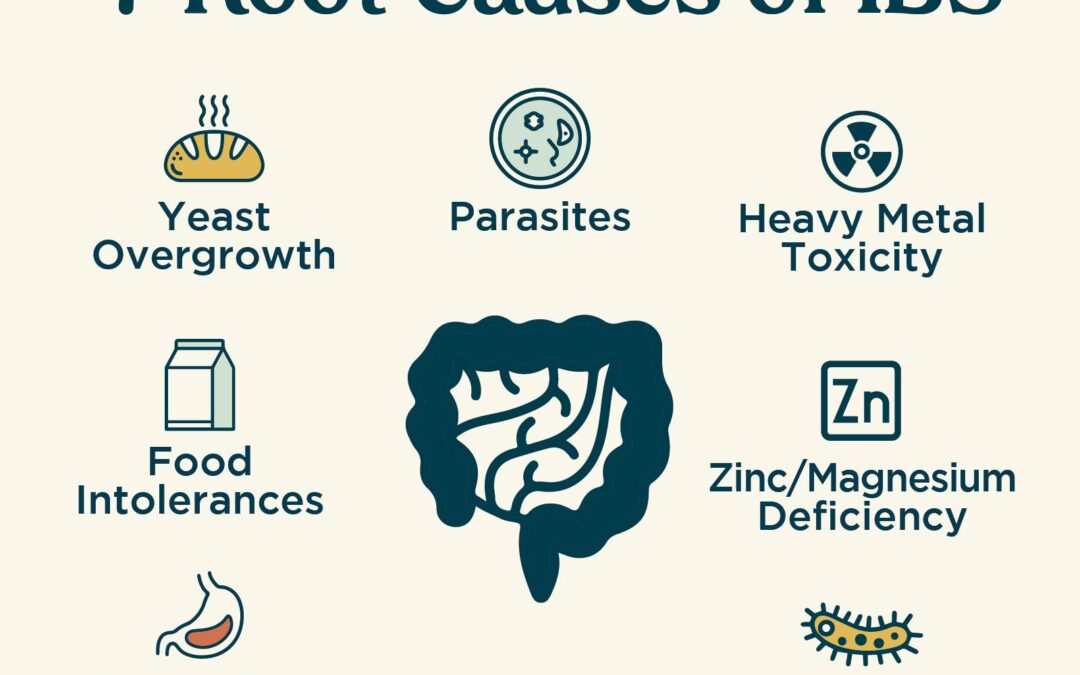
7 Root Causes of IBS – Irritable Bowel Syndrome
Most people are handed an IBS diagnosis and sent home with vague dietary advice or a prescription, all without learning about the causes of IBS. But what they really need is a roadmap. At PEAK, we guide our patients through that map using advanced diagnostic tools that uncover the seven root causes of IBS, which are yeast overgrowth, parasites, nutrient deficiencies, and more are at play. Identifying these reasons for IBS is the critical first step to building a personalized, long-term solution for gut health.
Receiving An IBS “Diagnosis”
One of the more common reasons people call for our help is to deal with chronic digestive issues such as GERD AKA heartburn, gas and bloating after eating meals, stomach pain and cramping, constipation, diarrhea, or a little of both, and other gut-related pain and discomfort.
In almost all of these cases, these people see their family doctor and maybe even a specialist like a gastroenterologist… and all of the testing comes back “normal”. Then they are told that they just have something called IBS AKA irritable bowel syndrome. But that isn’t a very helpful diagnosis without understanding what can trigger IBS. Let’s take a look at the causes of IBS.
What Is The Root Cause Of IBS?
A single root cause of IBS is difficult to determine. It is typically 1 of the 7 root causes of IBS that we cover below. Many patients we have seen or worked with have one or multiple of the gut-related reasons for IBS. With so many causes having the same symptom of irritable bowel syndrome, it can be challenging to pinpoint exactly which one is the cause of IBS.
IBS Is Caused By:
- Yeast Overgrowth
- Food Intolerances
- Leaky Gut Syndrome
- Parasites In The Gut
- Heavy Metal Toxicity
- Zinc/Magnesium Deficiency
- Sibo/Sifo
Learn more about what IBS is caused by below.
 “When all of the usual testing comes back “normal”, conventional providers usually don’t know where to look next for solutions. They label the issue as IBS and the person is left with taking meds long term to help manage, not sure, their issues.”
– Dr. Buddy Touchinsky DC, CFMP
Diagnosis is in parenthesis because it’s not really a diagnosis. It’s just saying that certain symptoms are present without any specific or known cause that result in irritable bowel syndrome. IBS, or Irritable Bowel Syndrome, simply means that there is a group of symptoms present without any specific or known causes that result in the symptoms the person is having.
At PEAK, we take the time to get to the bottom of your irritable bowel syndrome causes so you can live a healthier life. Contact us; let’s talk.
Seven Common Causes Of Irritable Bowel Syndrome
We want you to know the potential causes of IBS so you can start thinking about what may have been missed to this point and so you can get to the bottom of what’s causing your problems once and for all. Many of these causes are not considered in the conventional medical world. While these are potential IBS causes, we do not know if they are the cause for your IBS symptoms without further investigation. Below are 7 common causes of IBS:
1. Yeast Overgrowth Can Cause IBS
One cause for Irritable Bowel Syndrome can be yeast overgrowth, specifically a yeast growth type called candida. Food that contains sugar and simple carbohydrates and has a higher likelihood of being contaminated with yeast can have the potential to create IBS symptoms. If your diet has a consistent amount of yeast that triggers your IBS symptoms, it might be time to consider changing your diet. Learn more on how to treat IBS caused by yeast overgrowth.
2. Food Intolerances Can Cause IBS
Speaking of a healthy diet, there are a lot of food intolerances or food allergies that can create IBS symptoms. Some people have gluten intolerances while other’s stomachs have a reaction to carbonation, spicy foods or dairy products. Some irritable bowel syndrome food intolerances are obvious, other foods aren’t as obvious. Sometimes, even seemingly healthy foods can be a trigger. Learn more about Food intolerances and their relation to IBS.
3. Leaky Gut Can Cause IBS
While leaky gut does not always result in bowel issues 70 % of people diagnosed with leaky gut have IBS like symptoms. Being diagnosed with leaky gut (also called increased intestinal permeability syndrome) can help you narrow down the causes of IBS. Leaky gut and IBS have a lot of similarities in their symptoms as well as some of their causes potentially being diet related. Learn more about how leaky gut and IBS can be connected.
4. Parasites Can Cause IBS
A parasitic infection can cause major gut issues, pain and bloating and the end result of irritable bowel syndrome. Protozoan parasitic infections in the gut are one of the common reasons people are diagnosed with IBS. Learn how to treat IBS caused by parasites in your gut.
5. Heavy Metal Toxicity Can Cause IBS
There are a variety of metals that can cause heavy metal toxicity in your body. Some only need to be a small amount while others need to accumulate a large amount in your body. Metals are a problem because the “bad bugs” that live in the gut use them to create a protective coating making them more resistant to antibiotics and other treatments. Learn how to combat irritable bowel syndrome caused by heavy metal toxicity.
6. Nutritional Deficiencies Can Cause IBS
In contrast, heavy metal toxicity is being deficient in metals like zinc and magnesium. Being deficient in magnesium or deficient in zinc comes with a variety of symptoms, including fatigue and a loss of appetite. The symptoms can also align with a large number of IBS symptoms.
7. SIBO/SIFO Can Cause IBS
SIBO stands for small intestine bacterial overgrowth, and SIFO stands for small intestinal fungal overgrowth. When excessive bacteria grows in the small intestine, the results and symptoms are extremely similar to those of IBS. SIBO can greatly impact your health, so do not ignore your IBS symptoms. Learn more about treating IBS caused by SIBO/SIFO.
IBS Often Has More Than One Root Cause
An often overlooked part of Irritable Bowel Syndrome is that there can often be more than one single root cause behind your symptoms. Many people with IBS may be dealing with multiple imbalances at the same time. For example, someone might have both a parasitic infection alongside nutrient deficiencies, or yeast overgrowth might be occurring with food intolerances and intestinal permeability (sometimes referred to as leaky gut).
When there are multiple root causes, symptoms can become more persistent and confusing. This is one reason why IBS can feel unpredictable, as addressing only one factor may only provide temporary relief with other contributors remaining hidden. Understanding the multifactorial nature of IBS helps to explain why there is not one perfect solution.
While uncovering multiple root causes for your IBS can feel overwhelming, the good news is that understanding the factors that are affecting you puts you one step closer to getting relief. At PEAK, we help patients find these imbalances and work towards a personalized plan for a healthier gut and better quality of life.
IBS vs. “Just a Sensitive Stomach”
Having an upset stomach or a digestive problem here and there doesn’t always mean that IBS is the culprit. Eating too quickly or foods that are high in fat can sometimes make your stomach feel bloated for a short time. IBS is usually the suspect when it is chronic and constantly occurring, getting to the point where it interrupts your daily life.
A key difference between “just an upset tummy” and irritable bowel syndrome is the duration and consistency. Symptoms of IBS are often very long-lasting, lasting for months or even years, and they may seem to never really go away. These long-term patterns that get in the way of daily life may mean that there is a deeper gut imbalance instead of just a temporary digestive issue. Recognizing that your symptoms are signals and not just an annoyance is the first step. PEAK firmly believes there is hope for identifying the cause of chronic symptoms and regaining control over your health.
Why IBS Is Considered a Catch-All Diagnosis
IBS is often described as a diagnosis of exclusion, meaning that its diagnosis is given once more serious dysfunctions are ruled out. With this comes the fact that a specific cause is not always given up front with diagnosis, as the term irritable bowel syndrome mainly groups a collection of symptoms under a label.
Because the diagnosis of IBS is symptom-based, it makes sense that two people with IBS may have entirely different root causes. Understanding that IBS is a broad, symptom-based illness helps to explain why finding the root cause is so important for getting to the bottom of your persistent digestive issues. Even though IBS can sometimes feel frustratingly vague, clarity is possible and can give you a roadmap to lasting wellness.
At PEAK Integrative Medicine, we focus on identifying potential drivers behind chronic digestive symptoms through comprehensive evaluation and personalized care plans rather than relying solely on symptom management.
What This Article Does and Does Not Mean
When we talk about root causes of IBS, we are not suggesting that there is one secret infection, deficiency, toxin exposure, or food tolerance that explains it all for all people with IBS. Remember that an IBS diagnosis is given based on a specific pattern of symptoms like recurring abdominal pain and changes in bowel habits.
What we are saying is that many people with IBS have additional factors that might contribute to how they are feeling. These could include gut microbial imbalances, food reactions, stress physiology, nutrient deficiencies, motility changes, prior infections, or other health issues. At PEAK, we believe these possible factors deserve a deeper look and analysis.
This article is not meant to diagnose you but rather to help you ask better questions. It doesn’t confirm the exact cause of your IBS, replace quality lab testing, or serve as care from a qualified healthcare provider. If your symptoms are new, severe, or worsening with big red flags like blood in the stool, fever, persistent vomiting, etc., you should get medical attention ASAP.
Find Out What Is Causing Your IBS
Learn more about IBS and receive help diagnosing and determining the cause of your irritable bowel syndrome. IBS is just one of the many gut issues or chronic health problems we specialize in at Peak Integrative Medicine. We want you to live and feel healthier without the symptoms of IBS. Learn about IBS and how PEAK Integrative Medicine can help you. We provide direct primary care and functional medicine. Learn about our services and pricing or schedule a call with us today!
References
https://www.niddk.nih.gov/health-information/digestive-diseases/irritable-bowel-syndrome/
https://theromefoundation.org/rome-iv/rome-iv-criteria/
https://gi.org/topics/irritable-bowel-syndrome/
https://www.mayoclinic.org/diseases-conditions/irritable-bowel-syndrome/symptoms-causes/syc-20360016
7 Root Causes of IBS FAQ
Can IBS have more than one root cause?
Yes, there can be more than one factor that influences IBS symptoms. A provider like PEAK can help you understand what might be contributing to your situation and customize your assessment.
What kind of diagnosis is IBS considered?
Irritable bowel syndrome is a diagnosis of exclusion. It is a diagnosis made on the basis of a pattern of symptoms, and then only after excluding other dysfunctions.